搜索此博客

2025年11月27日星期四

What Are The Types of Fiber-Optic Sensors?

Fiber optic sensors mainly consist of a light source, an incident fiber, an outgoing fiber, an optical modulator, a photodetector, and a demodulator.

During operation, the light source enters the optical modulation region through the incident fiber. The physical quantity to be measured (such as pressure, temperature, displacement, etc.) acts on the modulator in the sensor, causing changes in parameters such as intensity, frequency, phase, and polarization state of the light wave transmitted in the fiber. The photodetector receives the changed light and converts the signal change into a physical measurement value through calculation.

Main Types of Fiber Optic Sensors

Fiber optic sensors can be divided into two main categories according to their structure: functional fiber optic sensors and non-functional fiber optic sensors.

Functional Fiber Optic Sensors

These utilize optical fibers (or special optical fibers) that are sensitive to and capable of detecting external information as sensing elements. The light transmitted within the fiber is modulated, causing changes in its intensity, phase, frequency, or polarization state. The modulated signal is then demodulated to obtain the measured signal.

These functional fiber optic sensors are characterized by their compact structure, strong compatibility, and high sensitivity, but require special optical fibers and are therefore costly. They are often used in environments requiring high measurement accuracy and sensitivity, and are unaffected by electromagnetic interference, such as structural health monitoring of bridges, tunnels, and in aerospace and defense.

The SFO-W fiber optic strain sensor is designed for civil engineering applications, specifically for monitoring the stability of building structures. Its sensitivity and resolution can reach 0.01%.
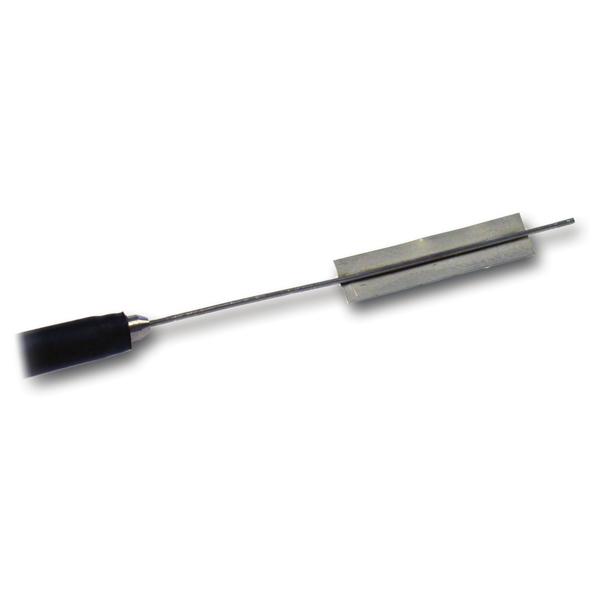
SFO-W fiber optic strain sensor

Non-functional Fiber Optic Sensors

Non-functional sensors use independent sensing elements located at the end of the optical fiber for light modulation. The optical fiber only serves as a signal transmission medium, transmitting light to and from external elements; the measurement is performed on the entire external element.

Non-functional fiber optic sensors are characterized by not requiring special optical fibers, low cost, independently optimizable sensing elements, and lower sensitivity. They are often used in applications where high detection accuracy is not required, localized point measurements are needed, and in harsh electrical environments.

The above is a brief introduction to fiber optic sensor types. OFweek Mall offers a wide variety of fiber optic sensors for wholesale. Welcome to visit our store for more information.

Related Articles

What Does The Fiber Optic Signal Conditioner Do? 

Where Can You Find Affordable Hall Effect Gear Tooth Sensors?

Application Advantages of Gear Tooth Speed ​​and Direction Sensors 

2025年11月24日星期一

What Does The Fiber Optic Signal Conditioner Do?

A fiber optic signal conditioner, also known as a fiber optic variable attenuator, fiber optic modulator, or fiber optic polarization conditioner, is a key device in fiber optic communication systems. It is primarily used to optimize and manage the transmission quality of optical signals, ensuring the stability and reliability of data within the fiber optic network.

Functions of a Fiber Optic Signal Conditioner

Signal Conversion

When long-distance, noise-resistant transmission is required, a fiber optic signal conditioner converts optical signals into electrical signals for monitoring, measurement, or control systems.

Signal Amplification and Enhancement

Amplifies weak optical signals to compensate for fiber attenuation, long-distance transmission, or connector loss. Ensures downstream devices can detect the signal and guarantees its accuracy.

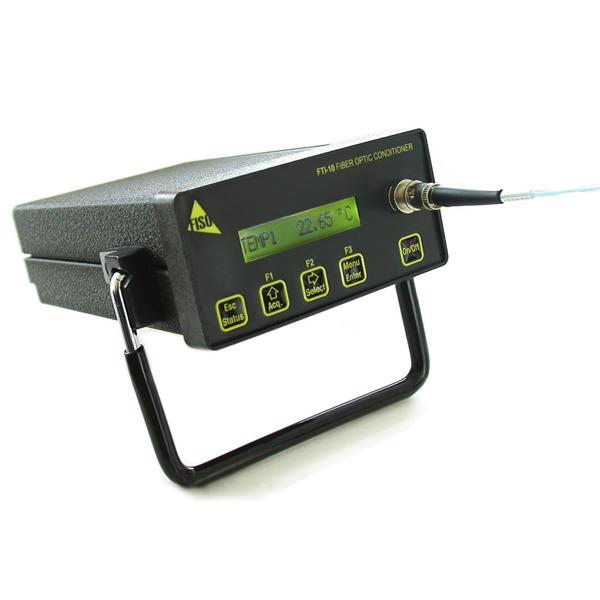
FTI-10 fiber optic signal conditioner

Signal Noise Reduction and Filtering

Performs low-pass/band-pass filtering on the input signal to remove high-frequency noise and unnecessary interference. Stabilizes the signal, ensuring high accuracy and stable output.

Signal Modulation

Processes signals from fiber optic sensors, such as distributed temperature/strain sensors, photoelectric level or pressure sensors, to extract precise data, such as temperature, pressure, vibration, and displacement signals.

Welcome to OFweek Mall to Wholesale Fiber Optic Signal Conditioners

Suppose you're still looking for fiber optic signal conditioners. Welcome to OFweek Mall, where you'll find a wide selection of fiber optic sensors and signal conditioners. Extensive stock and affordable prices. Visit OFweek Mall to learn more.

Related Articles

What are the Types of Voltage Transducers?

Where Can You Find Affordable Hall Effect Gear Tooth Sensors?

Application Advantages of Gear Tooth Speed ​​and Direction Sensors 

What Are the Classifications of Gear Tooth Speed Sensors?


2025年11月20日星期四

Where Can You Find Affordable Hall Effect Gear Tooth Sensors?

With the continuous development of industrial automation and automotive intelligent systems, the demand for accurate gear speed and position detection is gradually increasing. Hall effect gear tooth sensors are widely accepted in the market due to their support for zero-speed detection, strong anti-electromagnetic interference capabilities, and robust durability.

If you are still looking for a high-quality and stable supply of gear tooth speed sensors, welcome to visit OFweek Mall.

GS101201-GS101202 Series gear tooth speed sensor

OFweek Mall Supplies High-Quality Hall Effect Gear Tooth Sensors

OFweek Mall is dedicated to providing electronic engineers and enterprise purchasing personnel with high-quality sensors, integrated chips, electrical equipment, etc. It boasts abundant supplier resources and a wide variety of products for users to choose from. Here you can achieve one-stop purchasing of all electronic components suitable for your application.

stainless steel hall effect gear tooth speed sensor

At OFweek Mall, you can enjoy the following benefits:

✅High-quality certified sensors from well-known brands

✅Competitive pricing

✅Stable supply for bulk purchases

✅Professional technical support and product consultation

✅One-stop purchasing of sensors, modules, and industrial components

Whether you need speed & direction gear tooth sensors or customized Hall effect gear tooth sensor detection solutions, OFweek Mall can provide reliable options to meet your project needs.

Related Articles

Application Advantages of Gear Tooth Speed ​​and Direction Sensors 

What Are the Classifications of Gear Tooth Speed Sensors?

Why Choose a Flange Mount Gear Tooth Speed ​​Sensor?

2025年11月16日星期日

Application Advantages of Gear Tooth Speed ​​and Direction Sensors

Speed ​​& direction gear tooth sensors are integrated sensors that can detect both the speed and direction of movement of automotive gears. The following details their specific application advantages.

Simplified System Design

With a gear tooth speed and direction sensor, you only need one sensor to simultaneously monitor speed and direction. Compared to using traditional gear tooth speed sensors, this reduces the hassle of using additional components.

For example, the SD101201 gear tooth speed and direction sensor supplied by OFweek Mall uses two Hall effect sensors to provide independent digital outputs for speed and direction.

Easier Installation

Using an integrated gear tooth speed and direction sensor reduces wiring, connectors, PCB space, and installation tolerance issues.

SD101201 speed & direction gear tooth sensor

Higher Accuracy

Since there is no need to install an additional direction sensor, there is no problem with inaccurate direction detection due to installation tolerances and misalignment. Integrated gear tooth speed and direction sensors provide higher accuracy at low speeds because direction determination is directly integrated into the IC's magnetic architecture.

Lower Cost

While the unit price of an integrated direction and speed sensor may be slightly higher, the overall system cost is lower because the required hardware, calibration, and installation costs are lower.

If you need to purchase a gear tooth speed sensor, OFweek recommend prioritizing an integrated gear tooth speed and direction sensor. It can improve detection accuracy while reducing costs, making it ideal for space-constrained, compact systems. 

Related Articles

What Are the Classifications of Gear Tooth Speed Sensors?

Why Choose a Flange Mount Gear Tooth Speed ​​Sensor?

What is a Hall Effect Gear Tooth Speed Sensor?


2025年11月12日星期三

What Are the Classifications of Gear Tooth Speed Sensors?

Gear tooth speed sensors monitor the speed of rotating mechanical components such as gears and racks with high precision, ensuring the stable operation of mechanical equipment. They play a vital role in industrial manufacturing and the automotive industry. The following will detail the classifications of gear tooth speed sensors based on their working principles and application scenarios.

Magnetoresistive (MR) Gear Tooth Speed ​​Sensors

Based on the principle of electromagnetic induction, they determine the rotational speed by measuring the change in the magnetic field caused by the rotation of the gear. They feature high measurement accuracy, strong anti-interference capabilities, require no external power supply, and are suitable for operation in harsh environments.

MR gear tooth speed sensors are ideal for applications requiring precise speed and direction sensing, such as automotive, industrial machinery, and robotics.

Hall Effect Gear Tooth Speed ​​Sensor

Utilize a Hall effect element to detect changes in the magnetic field caused by the passage of a gear. Sensitive to magnetic field changes, they provide high-precision speed measurement and are commonly used in automotive ABS systems, crankshaft/camshaft sensing, and general motion detection.

Highly recommended the GS1001-GS1002 series hall effect gear tooth speed sensors are highly recommended. Made of stainless steel, they are extremely robust and durable, making them ideal for detecting the teeth of iron gears.

hall effect gear tooth speed ​​sensor

Photoelectric Gear Tooth Speed ​​Sensor

These sensors illuminate the gear with a beam and receive the reflected light signal, calculating the rotational speed based on the signal frequency. They are easy to install, require no gear bearings, and are suitable for applications without gear shafts.

OFweek Mall offers a wide selection of gear tooth speed sensors and other electronic components, all sold at wholesale prices. Welcome to OFweek Mall for more information.

Related Articles

Why Choose a Flange Mount Gear Tooth Speed ​​Sensor?

What is a Hall Effect Gear Tooth Speed Sensor?

In Which Industries are True RMS Voltage Transducers Primarily Used?

2025年11月10日星期一

Why Choose a Flange Mount Gear Tooth Speed ​​Sensor?

This type of gear tooth speed sensor primarily uses a flange-mount design, directly fixing it to the gear shaft via a flange. This simplifies the installation process and ensures a tight fit between the sensor and the gear. The following details the advantages of a flange-mount gear tooth speed sensor.

Advantages of Flange Mount Gear Tooth Speed ​​Sensor

Easy and Flexible Installation: No complex brackets or positioning tools are required. The sensor can be directly bolted to a flat surface, ensuring stable alignment with the target gear. Installation location is unrestricted.

Strong Environmental Adaptability

Flange-mount gear tooth speed sensors are typically housed in IP67-rated, durable housings capable of withstanding the effects of oil, dust, moisture, and temperature variations.

The SD101201 gear tooth speed and direction sensor is highly recommended. It can detect both gear tooth speed and the direction of gear tooth movement, effectively simplifying automotive system design.

SD101201 gear tooth speed and direction sensor

Excellent Compatibility

Available in various flange sizes and output types (Hall effect, variable reluctance, or reluctance), it can quickly adapt to different gear profiles and applications.

Easy to Maintain

The bolt-mount design makes disassembly and replacement very convenient, without the need to remove other nearby components or recalibrate the system.

OFweek Mall offers a variety of flange-mount gear tooth speed sensors at wholesale prices. Inquiries are welcome.

Related Articles

What is a Hall Effect Gear Tooth Speed Sensor?

In Which Industries are True RMS Voltage Transducers Primarily Used?

What is laser welding equipment?

2025年11月5日星期三

What is a Hall Effect Gear Tooth Speed Sensor?

A Hall effect gear tooth speed sensor is a non-contact speed measurement device designed based on the Hall effect principle. It is mainly used to detect the rotational speed, position, and direction of ferrous metal gears or racks, and is widely used in the automotive and industrial fields.

Working Principle of a Hall Effect Gear Tooth Speed ​​Sensor

When the gear rotates, the tooth tips and tooth grooves alternately pass near the Hall element, causing a periodic change in the magnetic field strength. The magnetic field strengthens when the tooth tips are close and weakens when the tooth grooves are far apart. This change causes the Hall element to output a pulse signal proportional to the rotational speed, which is then processed by the circuit and converted into a standard square wave output.

Characteristics of a Hall Effect Gear Tooth Speed ​​Sensor

Non-contact Measurement

No mechanical contact with the gear is required during measurement, effectively avoiding wear and extending the gear's lifespan.

SD501201 gear tooth speed and direction sensor


Strong Anti-interference Capability

The Hall element's output signal is minimally affected by environmental factors such as temperature and humidity, allowing for accurate measurement even in harsh environments.

Stable Output Signal

The Hall effect gear tooth speed sensor outputs a rectangular wave with amplitude independent of rotational speed, facilitating subsequent circuit processing.

Multifunctionality

Supports measurement of various parameters, including not only rotational speed but also angle, flow rate, and direction of rotation.

If you are interested in wholesaling Hall effect gear tooth speed sensors, please visit OFweek Mall, an online premium electronic components supply platform. It offers thousands of diverse electronic components and electrical equipment. All products are sold directly online by the original manufacturers, offering competitive prices and reliable quality.

Related Articles

In Which Industries are True RMS Voltage Transducers Primarily Used?

What is laser welding equipment?

Do You Know Where Optical Fiber Temperature Sensors are Used? 

Where Can You Wholesale Premium Electronic Components?

With the rapid development of consumer electronics, new energy, and artificial intelligence industries, the global demand for electronic com...