搜索此博客

2026年1月21日星期三

How to Choose a Load Cell?

Load cells are crucial components of various load systems, determining the accuracy and efficiency of load or force measurements. They are widely used in industrial automation, aerospace, and medical fields.

If you are struggling to wholesale load cells for your load system upgrade, please read the following to help you quickly determine the appropriate load cell.

5 Factors to Consider When Choosing a Load Cell

Determine the Required Load Cell Type

There are many types of load cells, each with its specific advantages and applications. You need to clearly define the type of force your load system will measure, such as tension, compression, shear, or bending. Accurately identifying the force type will help you quickly determine the appropriate load cell. If you are unfamiliar with the classification of load cells, you can read the previous articles on types of load cells.

Determine the Required Measurement Range

Determine the required load cell range for your load system. Ideally, choose a capacity 20% to 30% higher than the maximum expected load to avoid overload. Size is also important; it needs to be perfectly compatible with your load system.

Accuracy Requirements

For load systems used in medical and aerospace applications, high-precision load cells are required to ensure the reliability and safety of measurement results. In general industrial or logistics weighing scenarios, load cells with higher cost-effectiveness and moderate accuracy requirements can be selected based on actual needs.

Application Scenarios

The working environment affects the lifespan and accuracy of load cells. For applications involving water, corrosive substances, or high pressure, waterproof, explosion-proof, and corrosion-resistant load cells should be selected. The UPFT1 tank load cell maintains high performance even in harsh environments, making it ideal for such application scenarios.
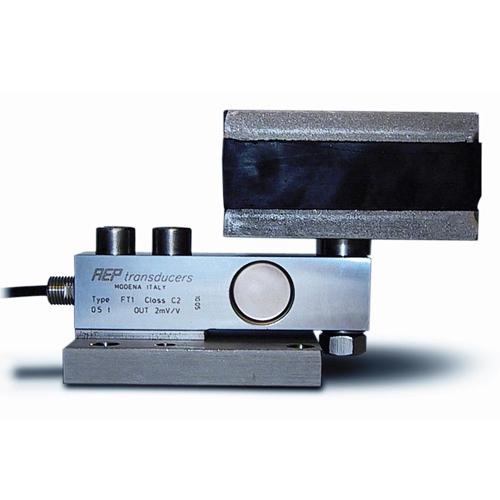
UPFT1 stainless steel tank load cell

Wholesale Load Cells from Professional Channels

Finally, it is advisable to wholesale load cells from professional platforms to ensure product quality and after-sales service.

Following these principles when wholesaling load cells will help you efficiently select the best load cell for your application.

OFweek is a professional platform providing high-quality electronic components, supplying a complete range of load cells, and offering excellent after-sales and logistics services. Welcome to visit and inquire; we provide professional pre-sales consultants.

Related Articles

What are the Types Of Load Cells? 

How to Choose a Liquid Level Sensor?

What Is A Load Cell?

2026年1月20日星期二

What are the Types Of Load Cells?

 Load cells are a crucial component of electronic scales, and there are various types available. A thorough understanding of the characteristics of different kinds of load cells will help you choose the best load cell for your application.

The following content will detail the classification of load cells based on their working principles and design structures.

Classification of Load Cells Based on Working Principles

Strain Gauge Load Cells

These use bonded strain gauges. The strain gauge deforms under force, changing the resistance. The load is determined by measuring the resistance. Bending beam, shear beam, S-type, and compression load cells all belong to the strain gauge category.

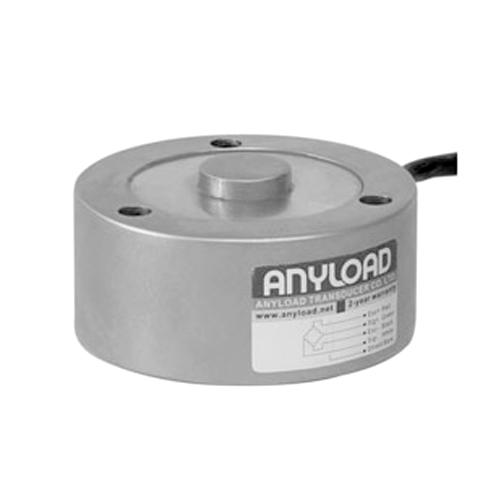
Anyload 276EH industrial compression load cell

Hydraulic Load Cells

These use fluid pressure (oil/water) to measure force. Their accuracy is lower than that of strain gauge load cells. They are ideal for measuring chemically corrosive liquids in industrial applications.

Pneumatic Load Cells

These measure force by measuring air pressure. They are suitable for explosive environments such as oil and gas plants and chemical plants.

Capacitive Load Cells

Force changes the distance between the capacitor plates. The load is determined by measuring the change in capacitance.

Piezoelectric Load Cells

Force generates an electric charge in piezoelectric materials, suitable for dynamic measurements.

Classification by Load Cell Design Structure

Single Point Load Cell

It can accurately measure the weight at a single location, even if the load is outside the center of the platform. Widely used in small weighing systems requiring high accuracy, such as platform scales, retail scales, and patient weighing scales.

Beam Load Cell

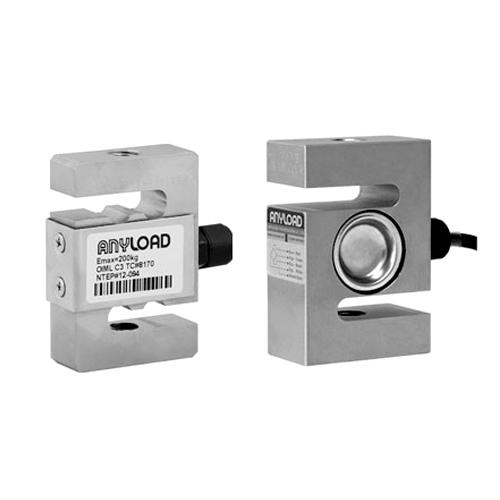
Beam load cells include single-ended beam load cells, s-beam load cells, and shear beam load cells. Shaped like a small beam, strain gauges are mounted on the beam. When a load or force is applied, the beam bends slightly; the strain gauges detect this bending and change their resistance.

Beam load cells are made of stainless steel or alloy steel, are easy to install, economical, and suitable for medium-load weighing.

101BH S-beam load cell

Compression Load Cell

Primarily used to measure compressive force, typically designed as a flat, button-operated, ring-shaped device to ensure stability and accuracy under downward loads. High load capacity, suitable for industrial weighing and heavy machinery monitoring.

Amplified load cell

Amplified load cells feature a built-in signal amplifier, eliminating the need for an external amplifier and simplifying installation. They are widely used in industrial automation, heavy-duty weighing, and high-precision material testing, as well as aerospace component testing.

OFweek supplies all of the load cell types mentioned above. Welcome to visit the OFweek website for more information.

Related Articles

How to Choose a Liquid Level Sensor?

What Is A Load Cell?

Why are Liquid Level Sensors So Important?

How to Choose a Load Cell?

Load cells are crucial components of various load systems, determining the accuracy and efficiency of load or force measurements. They are w...